Swimming halls are very well suited for solar thermal production. Typically, their heat consumption is big and the required temperature level tends to be relatively low. In such cases solar thermal collectors are operating with a very high efficiency.
However, quite often swimming halls are closed some time of the year and summertime closure may mean extra challenges for solar heat supply.
For Hämeenlinna swimming hall Savosolar solved this issue by feeding surplus solar energy in summer to the nearby district heating network. Thus, the solar system is producing heat all days and depending on the swimming hall’s actual heat demand, the facility is either a district heating provider or a consumer.
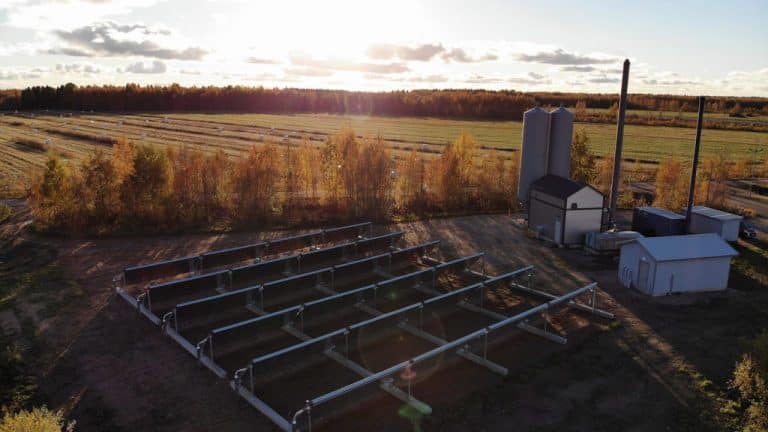
Savosolar delivered -once again- the largest solar thermal installation in Finland. This system is located way North in Tupos, Liminka – less than 200 km from the Arctic Circle.
The heating load of Tupos district heating is usually covered by wood pellets. Yet during summer time, the load is often so low, that the substantial wood pellet burner cannot be properly used and an oil burner got used, instead. The special challenge here has been to design a very efficient solar thermal system that could replace the oil consumption in summer to run the district heating network almost completely fossil-free.
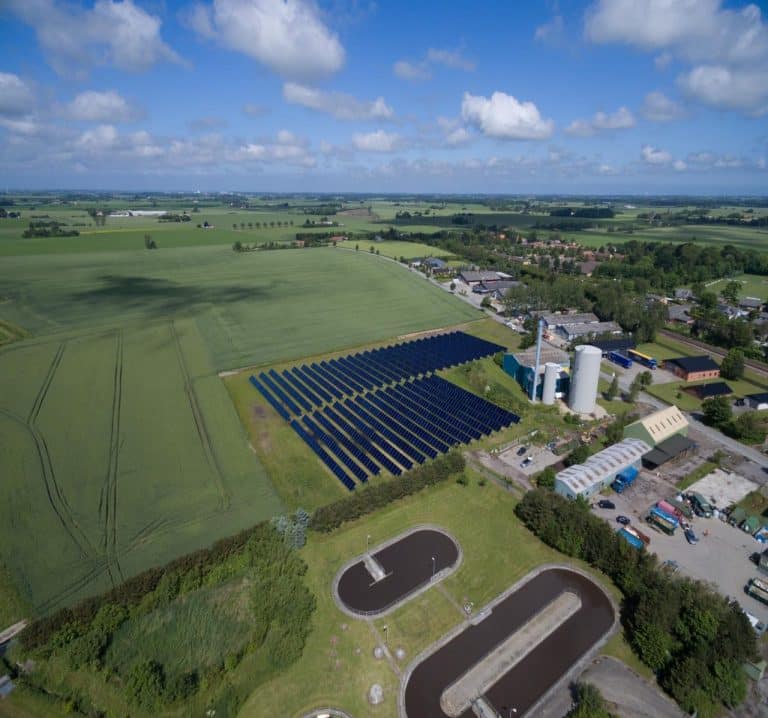
Lolland forsyning’s district heating plant in Søllested is located on the island of Lolland and was the first installation, where Savosolar’s double glazed collectors were used. The double glazing reduces heat losses through the glass side of collector and offers a higher efficiency, especially at higher operation temperature levels and during the darker months of the year. Søllested district heating plant has ca. 500 customers and also uses a 5 MW straw boiler and an oil burner to produce its heat.
The collector field in Søllested has a so-called hybrid field, with both single and double glazed collectors. The single glazed collectors are in the cold end of the collector rows and increase the low temperature as rapidly as possible, while the double glazed collectors are located in the warm side of the collector rows where it is more important to reduce the heat losses.
In Søllested, Savosolar was faced with a special challenge since the customer’s land has a sewerage pipe running through it. Since the owner of the sewer pipe needs to be able to access it in case of maintenance, Savosolar supplied a collector field which both optimised the use of the available land, while still providing access to the sewer pipe
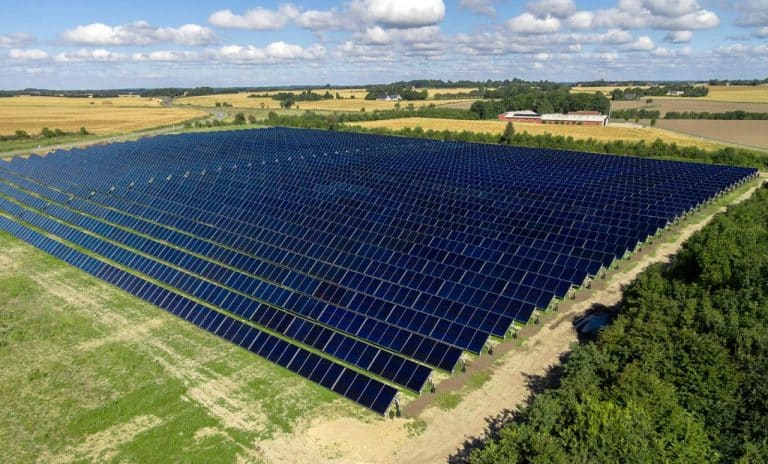
Jelling Varmeværk is a Danish district heating plant in the historical village of Jelling, which is the former home of the Viking Chief Harald Bluetooth. Apart from the 20,125 m² collector field, Jelling Varmeværk produces its energy from a 1 MW wood chip boiler, a 1.5 MW absorption heat pump and 2 gas CHP engines with a total capacity of 8 MW heat and 6 MW electricity.
The first solar system was commissioned in summer 2016 and during its first week of operation, the collector field set a new Danish record by producing nearly 5 kWh/m² in a day.
The collector field in Jelling has double stanchions which allows for two collector rows to connect to one and the same pipe and thereby save costs and thermal losses. The annual solar thermal production is about 11,200 MWh, which covers over 25% of the town’s energy need for heating.
In 2018, Jelling Varmeværk placed a second order with Savosolar for the 4,836 m² extension of the successfully running existing collector field. The extension will be installed in first half of 2019 and it will further grow the fraction of district heating produced with solar energy.
“We chose Savosolar as our collector supplier due to their high efficiency in combination with their innovative solutions. They enable us to have an environmentally friendly, stable and low price for heating over the next 20 years. Collectors have integrated hose connections which means that they disturb the landscape as little as possible in an historic village of Jelling. The collectors can also follow the curvature of the landscape which means that we didn’t have to level out the ground of the field.”