Warning: Array to string conversion in /data/e/0/e0f3f3e6-71ba-433b-8f8b-7d7be930c2c2/savosolar.com/web/wp-content/plugins/elementor/core/dynamic-tags/manager.php on line 66
Lolland Forsyning - Savosolar

District heating

Lolland Forsyning

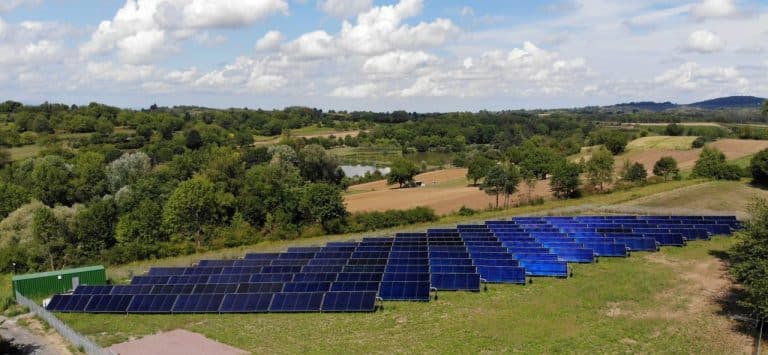
Lolland forsyning’s district heating plant in Søllested is located on the island of Lolland and was the first installation, where Savosolar’s double glazed collectors were used. The double glazing reduces heat losses through the glass side of collector and offers a higher efficiency, especially at higher operation temperature levels and during the darker months of the year. Søllested district heating plant has ca. 500 customers and also uses a 5 MW straw boiler and an oil burner to produce its heat.

The collector field in Søllested has a so-called hybrid field, with both single and double glazed collectors. The single glazed collectors are in the cold end of the collector rows and increase the low temperature as rapidly as possible, while the double glazed collectors are located in the warm side of the collector rows where it is more important to reduce the heat losses.

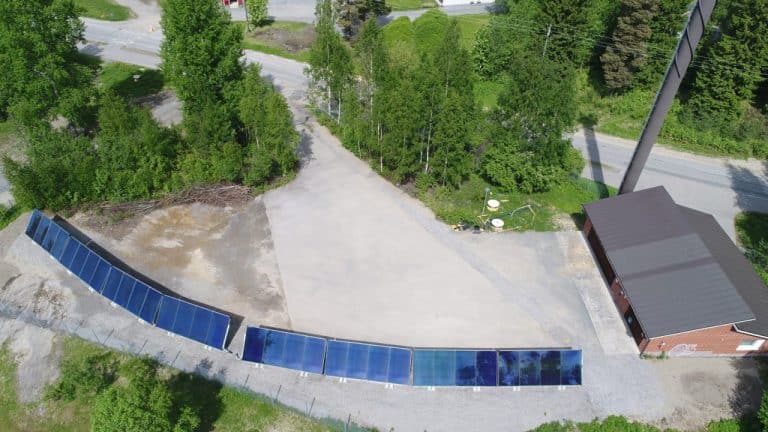
In Søllested, Savosolar was faced with a special challenge since the customer’s land has a sewerage pipe running through it. Since the owner of the sewer pipe needs to be able to access it in case of maintenance, Savosolar supplied a collector field which both optimised the use of the available land, while still providing access to the sewer pipe

Location

Denmark

Construction status

Finished

Installation year

2016

Solution type

District heating

Number of collectors

317

Collector Area

4700 m2
, gross

Collector Type

Savo 15 DG

Power

3500 kW

Energy production

Kherson

Savosolar’s first commercial solar cooling system was delivered to a school in Ukraine. The entire school was pre-fabricated in Finland and delivered to Ukraine by Elemenco Oy.

Outside of the cooling period, the solar thermal system produces energy for domestic hot water and space heating needs. During the hot summer time, three adsorption chillers cool the building via the air handling unit. The adsorption chillers, which were delivered by Savosolar, are driven by the solar thermal system.

Lolland Forsyning

Lolland forsyning’s district heating plant in Søllested is located on the island of Lolland and was the first installation, where Savosolar’s double glazed collectors were used. The double glazing reduces heat losses through the glass side of collector and offers a higher efficiency, especially at higher operation temperature levels and during the darker months of the year. Søllested district heating plant has ca. 500 customers and also uses a 5 MW straw boiler and an oil burner to produce its heat.

The collector field in Søllested has a so-called hybrid field, with both single and double glazed collectors. The single glazed collectors are in the cold end of the collector rows and increase the low temperature as rapidly as possible, while the double glazed collectors are located in the warm side of the collector rows where it is more important to reduce the heat losses.

In Søllested, Savosolar was faced with a special challenge since the customer’s land has a sewerage pipe running through it. Since the owner of the sewer pipe needs to be able to access it in case of maintenance, Savosolar supplied a collector field which both optimised the use of the available land, while still providing access to the sewer pipe

Grenaa Varmeværk

Savosolar was happy to sign its so far largest delivery contract with Grenaa Varmeværk in 2018. Savosolar’s highly efficient Savo 15 premium collectors are installed right next to an existing solar collector field which had been commissioned in 2014.

In this turn-key project Savosolar acts as the main contractor enlarging the solar fraction of the district heating network. Its operator, Grenaa Varmeværk, is producing about 146,000 MWh of heat per year. By using solar thermal it has managed to keep their customers´ heat price among the lowest in the whole of Denmark.

The new solar field with Savosolar collectors will increase the overall solar yield and ensure lowest energy production costs also in the future.